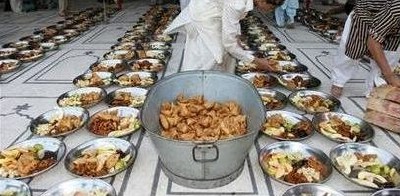
Showing posts with label Ramadan Iftar Recipes. Show all posts

Friday, August 20, 2010

Iftar Menu Ideas

If you are looking for iftar menu ideas for Ramadan 2010, here are an interesting Islamic multi-cultural food samples for you. It can indeed be difficult cooking up interesting and nutritious iftar dishes for a family who have been fasting all day. We hope you are amply inspired by the iftar menu ideas below!

Easy and Tasty Iftar Recipe Ideas

Appetizer

Moroccan Seafood (Shrimp) Briouat

or

Egyptian Baked Sambusak

Soup

Iranian Ramadan Soup
(Aash-e Sholeh-Ghalamkar)


or

Haleem

Main Dish

Moroccan Chicken Couscous

or

Lebanese Lamb Yoghurt Stew

Salad

Easy Cucumber Mint Salad

Dessert

Ramadan Dessert from Iran
Zolbia Bamieh


Wednesday, August 11, 2010

Easy Iftar Recipe Ideas

Dear Readers,

How was or is the first day of Ramadan for you? InshaAllah, it will be as good as it was for us over at The Ramadan Blog.


If you are in need of easy, interesting tasty and iftar recipe ideas, please visit this recommended website:

Islamic Iftar

The Iftar recipe ideas at that website are compiled by a few of our enterprising sisters who also work on The Ramadan Blog.

To get you started, you can browse the few iftar recipe selections below that were compiled at Ramadan Blog before Islamic Iftar was created.

Please keep in mind that Islamic Iftar will contain updated iftar recipes, and also a selection of Eid recipe ideas. We will no longer post iftar recipes at the Ramadan Blog. So please bookmark the Islamic Iftar.

Thanks!


Easy and Tasty Iftar Recipe Ideas
Compilation Made in 2008 and 2009


Singapore Rice Porridge

Moroccan Hearty Soup - Harira

Indian Hearty Soup - Haleem

Middle Eastern Chickpea Soup

Kuwaiti Chicken Mechbous

Saudi Arabian Al Kabsa

Syrian Chicken Fatteh

Moroccan Chabakia

Moroccan Almond and Avocado Milkshake

Malaysian Steamed Almond Cake

Date and Cardamom Moist Cake

Thursday, September 3, 2009

Iftar Recipes | Quick and Easy Iftar Ideas

A lot of Muslim women today work a full-time job. In addition to their work responsibilities, many Muslim women also want to take on the kitchen responsibilities of cooking delicious and healthy meals for iftar. It is not an easy task! Sometimes you arrive home just two hours before iftar. So here are some quick and easy iftar recipes that you can use to whip up healthy and delicious iftar meals.

Iftar Recipes
Quick and Easy Iftar Recipes


Chicken Fajitas


Fajitas are a really good idea and they are not heavy on the stomach.

Slice boneless chicken breasts into thin strips and then marinate them in lemon juice, soy sauce, finely chopped onions, finely chopped jalapenos and a sprinkle or two of chili sauce depending on how spicy you want it. This can be done in the morning when you get up for sahoor or the night before. Then for iftar, stir fry the chicken until its done, and serve with warmed up tortillas, salsa, sour cream, guacamole, and shredded cheese.

Shrimp Fajitas


Saute the shrimps in a bit of oil, salt and pepper, and oregano. Saute a couple of yellow zucchini, couple of tomatoes, bell peppers individually. You can sit these in one bowl since you'll be piling these on the tortilla anyways. Sprinkle them with some salt. Warm up the tortillas in the microwave, spoon (1-2 tsp of taco sauce) and fill it with shrimp, veggies, cheese, roll it up and lightly fry in the pan so it is golden brown on all sides.

Quick Pan-Fried Tandoori Chicken


Just marinate some chicken in yogurt, lemon juice, mashed garlic, tandoori spices etc. Then add to a hot non-stick pan with about an inch of oil in it. Pour in about a cup or 2 of water and stir. Cover and cook on high for about 7 mins, then turn chicken over and cook for 5 mins more (covered). Then take lid off and stir fry uncovered until the liquid has evaporated. It's really tasty and quick. Serve with plain boiled white rice or pitta bread / wraps, hummus/ raita / salad / fresh tomato chutney / salsa.

Iftar Recipes | Date and Cardamom Moist Cake

Today, we feature a delicious Iftar Recipe using dates that is perfect as an iftar dessert. Try this dish out for your iftar menu.

No Ramadan iftar is complete in a Muslim household without dates. Sales of dates increase during Ramadan with Muslims buying dates for their families. The health benefits of dates are also multiple.

For more information on the health benefits of dates, please click here.

Iftar Recipes
Date and Cardamom Moist Cake


Ingredients

7 cups all-purpose flour (you can use 3 1\2 cups whole wheat flour +3 1\2 cups all-purpose flour).
1 cup oil.
1 cup low fat milk or soy milk.
2 Tablespoons baking powder.
2 Tablespoons ground cardamom.
1\2 Tablespoon baking soda.
2 cups Date molasses.**

Walnuts Filling
Mix together and keep aside.

1 cup chopped walnuts.
1\4 cup raw sugar.
4 Tablespoons rosewater.
Pinch of ground cardamom.
Pinch Saffron.

Method

1)Mix Date molasses with milk and than mix it with oil.
2)Combine flour with cardamom, baking powder, and baking soda in large mixing bowl.
3) Mix step 1 and step 2 together and now you have the dough.
4) Divide the dough into 2 equal portions (use water or oil when you divide the dough)
5) Flatten dough into 22cm x 30cm pan, fill with walnuts filling, then but the second portion and flatten.
6) Bake at 350F for 30-33 minutes or until done.
7) Keep it in the pan and cool it for 2-3 hours.

** Date molasses is (thick syrup made from pressed dates used a lot in the Gulf area in cooking and baking especially in traditional dessert. You should be able to find it in Arabic specialty shops or health store.


Note: You can make your own cardamom powder, but pounding gently on the cardamom pod to crack it open. The cardamom powder is inside the pod. Making the cardamom powder this way when you need it ensures the fragrance of this spice stays fresh.


Iftar Recipes - Date and Cardamom Moist Cake

Friday, August 28, 2009

Ramadan Iftar Recipe from Morocco | Milkshakes

Milkshakes are a good way to introduce healthy drinks into the Ramadan iftar menu. Milkshakes are easy to prepare, nutritious (especially for children who have been fasting) and tasty.

The following two recipes for milkshakes are from Morocco. They are popular drinks served during iftar in Morocco.

Moroccan Almond Milkshake


Ingredients

* 1/2 cup almonds, blanched and peeled
* 1 1/2 cups cold milk
* 3 to 4 tablespoons sugar
* splash of orange flower water
* 4 or 5 ice cubes, optional

Method

Place the blanched almonds in a blender, and process until the almonds are a fine powder. Add the milk, sugar and orange flower water, and blend on high speed to mix well. If desired, add ice cubes while the blender is running to chill the drink even more. Pour into glasses, and serve immediately.

Moroccan Avocado Milkshake


Ingredients

* 2 to 3 cups cold milk
* 1 ripe avocado
* 3 tablespoons sugar
* handful of ice (optional)

Method

Peel the avocado and cut in half. Discard the pit. Put the avocado and sugar in a blender with 1 cup of milk. Blend until very creamy and smooth.

Gradually add another cup or two of milk to make the shake as thin or as thick as you like. How much milk you need will depend on the size of the avocado.

Add a handful of ice to the blender if you like your shake well-chilled, and blend for another minute. Pour into glasses, and serve.

Enjoy Ramadan Tastes from Around the World
Here on the Ramadan Blog!


Healthy Eating Habits Tips During Ramadan
Here on the Ramadan Blog!


Healthy Eating During Ramadan

How to Fast Healthily During Ramadan

What to Avoid During Ramadan

Honey | Beneficial Things to Eat During Ramadan

Ramadan Iftar Recipe From Morocco | Chabakia

The chabakia (or chebbakia, chebakia, shabakia) is a Moroccan dessert that is very popular during Ramadan. Chabakia are crisp, honey-soaked almond pastries flavored with saffron and orange water and sprinkled with sesame seeds, a traditional Ramadan treat.

Try this recipe out for your iftar. Your family will certainly enjoy it!


Chebakia Ramadan Iftar Recipe


Ingredients

1 Kilo all-purpose flour
125g butter (melted)
1/2 cup olive oil
1/2 tsp powdered cinnamon
1 tbsp grounded anise seeds
1 tsp grounded arabic gum with little bit of sugar
1/2 roasted and grounded sesame seed
1 cup of peeled, roasted and grounded almonds
2 tbsp of vinegar
A pinch of salt
1/2 tsp saffron in a half a cup of blossom water
250g honey
2 tbsp of roasted sesame seeds for sprinkling.

Method

1) Blossom water to mix the dough. (About a cup and half)

2) Mix all the ingredients except the honey and the sesame seeds (for sprinkling)

3) The dough would be hard to handle in the beginning. Knead it well.

4) Form the dough into four medium balls.

5) Wrap them in plastic bag and let it rest for 15min. Now use a rolling pin to flatten the dough. and shape into squares.

6) Make three cuts into each square and shape them following the steps in the pictures. Put them on a tray powdered with little bit of flour.

7) Once done, heat a frying pan and cook them on both sides for about 3min on each side, on a medium high setting.

8) Dip them immediately in honey as long as you can. Drain them, and sprinkle them with the sesame seed.


Enjoy Ramadan Tastes from Around the World
Here on the Ramadan Blog!


Healthy Eating Habits Tips During Ramadan
Here on the Ramadan Blog!


Healthy Eating During Ramadan

How to Fast Healthily During Ramadan

What to Avoid During Ramadan

Dates | Beneficial Things to Eat During Ramadan

Honey | Beneficial Things to Eat During Ramadan

Saturday, August 22, 2009

How to Fast Healthily During Ramadan

Eating Healthy During Ramadan Gives Us Energy to Embark on Increased Religious Obligations

It can be very easy to fall into a bad routine during Ramadan. The lack of food may give us excuse to be lethargic, lazy and irresponsible towards the many obligations and duties in our lives. We may slack off at work, stop studying at school and so on. That is very bad, and contrary to what it expected of Muslims during Ramadan.

To counter this, the article below shows how you can maintain a healthy diet while fasting. Here are some simple guidelines to make sure that your diet remains balanced and healthy during this fasting period:

This Type of Schedule is NOT what You Want During Ramadan


Don't skip breakfast (Suhoor) Even though sleep may seem far more appealing than waking up to force down some food, don't skip breakfast. Breakfast is the most important meal of the day. Research has shown that breakfast provides the essential energy and nutrients needed for concentration, while keeping hunger symptoms like headaches, fatigue, drowsiness and restlessness at bay. In addition, it speeds our metabolic rates. It is therefore vital to ensure an adequate intake at breakfast time.

Eat a wide variety of foods When your daily intake is limited to two meals per day, you need to put extra effort into including foods from all the food groups. Our bodies need at least 40 different nutrients daily, to ensure that we grow properly and maintain good health. Although most foods contain more than one nutrient, no single food provides all the necessary nutrients. Moreover, foods have benefits that can't be replicated by a pill. So it is important to eat a wide variety of foods every day, to ensure that we get all of these nutrients. Select foods each day from each of the five food groups:

· Breads, cereals and other grain products
· Fruit and vegetables
· Meat, fish and poultry
· Milk, cheese and yoghurt
· Fats and sugars (these are low in nutrients & high in calories, so limit intake!)

Eat low glycaemic (GI) foods at breakfast to help control blood sugar levels Carbohydrates are classified according to their glucose response or glyceamic index (GI). The GI measures how fast the carbohydrate of a particular food is converted to glucose and enters the bloodstream. The lower the GI, the slower the food is converted to sugar and the longer it satisfies your hunger. Selecting low GI foods helps maintain normal blood sugar, minimises hunger pangs & satisfies appetite without providing excess calories. Also, by controlling blood sugar levels, you prevent excessive eating binges as a result of low blood sugar levels. Remember to include low GI foods at each meal, and to avoid eating high GI foods on their own, but rather to mix them with low GI foods, which will give an intermediate GI overall.

Be aware of your cooking methods By making small changes in your cooking habits, you can create great-tasting foods that are also healthy for you. Many of those treasured family-favourite recipes have a very high fat content for today's health-conscious living. Don't give up on your favourites – just convert them!

Here's how:

· Always trim off excess fat from before cooking, or use venison, chicken and soya as lower fat options. Remove poultry skin & choose light meat (eg. breast).

· Cut down on fat intake during cooking:

- cook onions in a little water or vegetable stock rather than oil or butter
- use non-stick frying pans & non-stick sprays rather than oil or margarine
- bake, grill or roast foods rather than frying
- cook roasted meat or poultry on a wire rack so that the fat can drip off
- Steam or boil vegetables
- when preparing rice, noodles & other grains, season with herbs, spices & broths rather than added fat
- prepare soups, gravies & sauces in advance, so that they can be refrigerated, allowing you to remove the layer of fat that forms on top.
- Use herbs and spices to add flavour & zest to low-fat cooking. Basil, bay leaf, oregano, & rosemary add distinctive flavours & colours to meat & vegetables. Spices, like cinnamon, ginger & nutmeg enhance the sweet taste of foods, & seasoning blends, such as chilli powder, curry powder provide a complex array of flavours

· Avoid taking in too much salt

- Use garlic, dry mustard, pepper, onions, mushrooms & tomatoes to add flavour to meat and vegetables - Add sliced lemon or lemon juice to white meats & fish
· Make healthy changes to recipes Cut the fat in half - if a recipe requires cream or whole milk, use evaporated or fresh skim milk. If a recipe requires a whole egg, use two egg whites, etc.

Eat enough carbohydrate foods - especially those rich in fibre These foods provide the body with energy. They are rich in B vitamins, and are an excellent source of fibre. Hi-fibre foods also fill you up more than low-fibre counterparts. Foods high in fibre include brown rice, wholegrains, fresh fruit and raw veggies.

Remember your fruits and vegetables - Fruit and vegetables add colour and variety to the menu. They are "protective" foods as they help the body fight off sickness and disease. They are also rich sources of a variety of vitamins, minerals, and fibre, and are low in calories.

Drink sufficient fluid - Always include water in your diet, and cut down on caffeine-containing beverages. Caffeine is a diuretic and will not provide adequate hydration.
We all know that maintaining a balanced diet by eating healthily has a vital influence on your well being. Try following the above principles so that this fast period does not sway too much from the principles of good nutrition.

Source: www.themodernreligion.com

Over-eating is Dangerous So Avoid It


Enjoy Ramadan Tastes from Around the World
Here on the Ramadan Blog!


Ramadan Iftar Recipe from India

Ramadan Iftar Recipe from Singapore

Ramadan Iftar Recipes | Middle East Soups

Ramadan Iftar Recipe from Morocco

Ramadan Iftar Recipe from Saudi Arabia

Ramadan Iftar Dish from Saudi Arabia - Al Kabsa

Ramadan Iftar Dish from Syria - Chicken Fatteh

Ramadan Iftar Recipe from Kuwait

More on Ramadan Iftar Recipes

Ramadan Iftar Recipe | Chicken Fatteh Iftar Dish from Syria

The fatteh is a favorite Ramadan iftar dish in Syria. The fatteh dish is simply shredded bread soaked in stock (broth) with different types of topping. There are different types of fatteh dishes around the Middle East.

The Syrian fatteh is made of three main layers (reminiscent of the lasagne without tomato sauce and cheese). The base layer is made of shredded bread soaked in chicken stock, the middle layer consists of the main ingredient (the chicken; but also can be chickpeas, aubergines, or even kidney ) and finally a yogurt and tahini sauce topping. are the most common roughly in that order.

Since the bread is soaked in stock, it can become too soggy if it is prepared well in advanced. The key to a good fatteh is to assmble it moments before it is served. This will prevent the dish from getting too soggy.

Note: Do not use pita bread for the fatteh dish. Instead use Arabic Flat Bread.


Ingredients:

Arabic bread 3 standard size (small)
Chicken thighs 4
Chicken stock 500mls
Onion cut into quarters
Yogurt500 g
Tahini 4 tbs
Garlic 2-3 cloves
Lemon
Salt
Pepper
Parsley chopped 4 tbs
Pine nuts
Paprika

Method:

1) Start by cooking the chicken and making your stock. Wash the chicken thighs, cover with water and bring to boil skimming the surface till totally clear. Add the onion and salt and pepper, turn down the heat and let simmer slowly for 45 - 60 min. When cooked, remove the chicken and let cool down. Strain stock and return to very low heat till ready to use it.

2) Shread your Arabic bread into one inch pieces.

3) Remove the chicken meat from the bone and shred to bite size.

4) Add yogurt, tahini, crushed garlic, squeeze of lemon and salt and mix together to make your topping.

5) Put the bread and the chicken in a deep bowel. Add one third of the yogurt sauce and the stock and mix together. Spoon the rest of the yogurt topping and spread evenly on top.

6) Garnish with parsley, roasted pine nuts and paprika and serve immediately.

Enjoy Ramadan Tastes from Around the World
Here on the Ramadan Blog!


Ramadan Iftar Recipe from India

Ramadan Iftar Recipe from Singapore

Ramadan Iftar Recipes | Middle East Soups

Ramadan Iftar Recipe from Morocco

Ramadan Iftar Recipe from Saudi Arabia

Ramadan Iftar Dish from Saudi Arabia - Al Kabsa

Ramadan Iftar Recipe from Kuwait

More on Ramadan Iftar Recipes

Thursday, August 20, 2009

Ramadan Iftar Recipes | Saudi Iftar Dish - Al Kabsa

Saudi Arabia, the third-largest country in Asia, constitutes about four-fifths of the Arabian Peninsula.The people of Saudi Arabia are descended from tribes of nomadic sheep and goat herders and maintain many of the traditions of their past. Traditional food like dates, fatir (flat bread) and the al kabsa (rice and meat dish) are still eaten by Saudis today.

The Al Kabsa is considered the national dish of Saudi Arabia. It is featured on many tables for iftar during Ramadan. If you are planning your iftar menu for your family and friends, you might want to consider making the Al Kabsa. It is very easy to make and would make an excellent iftar dish that everyone would relish and remember!


Saudi Arabia Ramadan Iftar Dish

Photo Source: http://www.flickr.com/photos/somah/348376306

Ingredients

2 1/2 kg lamb, large cubes
4 cups basmati rice
1/2 kg carrots, peeled and finely diced
1 green pepper, seeded and finely diced
1 kg tomatoes, peeled and diced
1 kg finely chopped onions
6-8 garlic cloves, minced
1 pinch ground cumin
1 pinch ground coriander
salt and black pepper
butter or olive oil(for frying)
1/4 cup toasted pine nuts

Kabsa Spice Mix

1/2 teaspoon saffron
1/4 teaspoon ground green cardamoms
1/2 teaspoon ground cinnamon
1/2 teaspoon ground allspice
1/4 teaspoon white pepper
1/2 teaspoon ground dried limes

Sauce

2 cups water
1 beef stock cube(Maggi)
1 large onion, finely chopped
14 ounces chopped tomatoes
3 garlic cloves, minced
1 tablespoon tomato paste
1/4 cup diced celery
salt and black pepper
2 tablespoons butter

Method

1. Fry meat until browned on all sides. Add enough water to the pot so that it covers the meat by 1.5″-2″, bring to a boil then cook gently over medium heat for 1 1/2 - 2 hours or until tender. Reserve stock & set meat aside.

2. Soak rice for 15 minutes. Drain, rise under running water then drain well.

3. Add butter to a large stock pot or casserole, fry the onion, pepper, carrot & spices. Cook on low heat for about 10 minutes, or until tender.

4. Add rice to vegetables in the pot, cook for 5 minutes on medium heat. Add meat stock until stock covers rice (approx 1.5″ above rice). Cover pot. Cook on low heat for 30 minutes or until tender - add a little more stock or water if rice seems to become dry.

5. Prepare the sauce.

6. Fry onion, garlic and tomato in the butter. Add tomato paste, celery, salt, cinnamon, water & stock cube. Cook on medium heat until slightly thickened and celery is tender.

7. Serve in a large dish or on a platter. Place the rice first, top with meat & garnish with pine nuts. Serve the sauce in a jug with a spoon.

Saudis enjoy the al kabsa with a hot sauce called ’shattah’

Saudi Ramadan Iftar


Enjoy Ramadan Tastes from Around the World
Here on the Ramadan Blog!


Ramadan Iftar Recipe from India

Ramadan Iftar Recipe from Singapore

Ramadan Iftar Recipes | Middle East Soups

Ramadan Iftar Recipe from Morocco

Ramadan Iftar Recipe from Saudi Arabia

Ramadan Iftar Recipe from Kuwait

More on Ramadan Iftar Recipes

Tuesday, August 18, 2009

Ramadan Iftar Recipes | Tasty Food from Kuwait

Briyani-like rice dishes are popular in the Arabian Gulf states. From the Omani briyani to the Kuwaiti briyani (called the Mechbous) to the red-hued ruzz bhukari, the brown-tinged sayyadiyyah, mashkul, mandi and kabsa.

For today's Ramadan Iftar recipe, we turn to Kuwait for the delicious rice dish called the Mechbous. The dried limes, cloves and cinnamon sticks give this popular Kuwaiti rice dish a lovely zesty taste!

Kuwaiti Chicken Mechbous


Ramadan Iftar Recipe:
Kuwaiti Chicken Mechbous


Ingredients:

Chicken
Salt
1 cinnamon stick
2 cardamom pods
2 or 3 whole cloves
5 black peppercorns
Flour
3 cups basmati rice (or other short-grained rice)
Onion-spice topping (hashu):
2 large yellow onions, finely chopped
1 Tbsp. vegetable oil
¼ cup golden raisins, soaked in water
¼ tsp. ground cardamom
¼ tsp. dried black lime (loomi), or ½ tsp. lime zest**
¼ tsp. ground black pepper
½ tsp. sugar
Tomato sauce (duqqus):
2 large tomatoes, chopped
2 Tbsp. water
2 cloves garlic, crushed
1 Tb. tomato paste

Method:

1) Rinse chicken inside and out. Place in a stockpot with enough water to cover. Add cinnamon stick, cardamom pods, cloves, and peppercorns. Bring to a boil, and continue to boil uncovered over medium heat until chicken is done (approximately 40 minutes). Remove and drain the chicken, reserving broth.

2) Drain fat off the top of the broth and strain broth to remove spices. Prepare three cups of basmati rice according to package directions, using broth from chicken instead of water. Add salt if necessary.

3) While rice is cooking, cook onions in a nonstick skillet over medium heat, stirring frequently, until clear. Sprinkle with a little water and stir quickly until onions are brown and the water has evaporated. Stir in oil, draineraisins, and spices. Cook for one minute. Remove mixture from skillet and set aside.

4) Lightly dust the boiled, drained chicken with flour. In a clean skillet over medium-high heat, brown the chicken, turning frequently, until the outside is brown and crispy.

Preparing for Community Iftar in Kuwait


Enjoy Ramadan Tastes from Around the World
Here on the Ramadan Blog!


Ramadan Iftar Recipe from India

Ramadan Iftar Recipe from Singapore

Ramadan Iftar Recipes | Middle East Soups

Ramadan Iftar Recipe from Morocco

Ramadan Iftar Recipe from Saudi Arabia

More on Ramadan Iftar Recipes

Monday, August 17, 2009

Ramadan Iftar Recipes | Vegetarian Soups from the Middle East

The Arabs make great soups. Soups are easy to make, tasty, healthy, wholesome and filling. As such soups are a great dish to serve for iftar during Ramadan.

Here's a basic, yet delicious, chickpea-based soup.


CHICKPEA SOUP - HASA AL-HUMMUS(Serves from 6 to 8)

Ingredients:

1 cup chickpeas, soaked in water overnight, then drained
8 cups water
1 Tablespoon olive oil
2 medium size onions, chopped
8 cloves garlic, chopped into small pieces
1 small hot pepper, finely chopped
1/2 cup finely chopped coriander leaves
2 teaspoons salt
1 teaspoon pepper
1 teaspoon ground mustard seeds
1/4 cup lemon juice

Method:

1) Place chickpeas and water in a saucepan and bring to boil. Cover and cook over medium heat for 1 hour.

2) In the meantime, heat oil in a frying pan; then stir-fry onions, garlic, and hot pepper until they begin to brown.

3) Add frying pan contents with the remaining ingredients to the chickpeas. Cover and cook over medium heat for 1 hour or until chickpeas are well-cooked.

Total Calories Per Serving: 133
Fat: 4 grams

Enjoy Ramadan Tastes from Around the World
Here on the Ramadan Blog!


More on Ramadan Iftar Recipes

Ramadan Iftar Recipe from Singapore

Ramadan Iftar Recipe from Morocco

Ramadan Iftar Recipe from India

Ramadan Iftar Recipe from Saudi Arabia

Ramadan Iftar Recipe from Kuwait